Foods & Drinks That Trigger Hot Flashes (and What Helps)

What foods and drinks trigger hot flashes?
Caffeine, alcohol, spicy food, and hot drinks are among the most common hot flash triggers. They don’t cause hot flashes. According to Mayo Clinic, that comes from lower estrogen making the brain’s thermostat, the hypothalamus, more sensitive to slight changes in body temperature.[1] But these foods and drinks can be enough to tip you over that more sensitive threshold on a given day. Mayo Clinic recommends watching what you eat and drink and limiting these common triggers.[2]
Triggers are individual. Something that sets off a flash for one woman may do nothing for another. But these show up most often.
What are the most common hot flash triggers?
- Caffeine. Coffee, black tea, energy drinks, and some sodas. Mayo Clinic lists caffeine among the common triggers to limit.[2]
- Alcohol. Also on Mayo Clinic’s list of common triggers.[2] Many women notice evening drinks are especially likely to lead to night sweats.
- Spicy food. Mayo Clinic recommends avoiding spicy foods if they set off your hot flashes.[2] Capsaicin, the compound that gives chili peppers their heat, creates a warming sensation that can be enough to set one off.
- Hot drinks and hot soup. The temperature of what you’re eating or drinking, not just what’s in it, can be a trigger on its own. Mayo Clinic suggests avoiding hot beverages.[2]
- Large, heavy meals. Some women find a big meal, especially in the evening, makes them feel warmer and more prone to a flash.
- High-sugar foods. Some women report sugary foods as a trigger, though this is based more on personal experience than on research.
What should you eat or drink instead?
- Iced or room-temperature drinks instead of hot ones
- Caffeine-free options, such as iced herbal teas like peppermint or chamomile, instead of coffee or black tea
- Milder seasoning, or add heat gradually to find your personal threshold
- Smaller, lighter meals, especially in the evening
- Water throughout the day, since staying well hydrated helps you feel better when you’re running warm
How can you find your own triggers?
Because triggers are individual, a simple food log beats any generic list:
- Note what you ate or drank in the hour before each flash.
- Note the time of day and how intense it was.
- After two to four weeks, look for repeat patterns. One or two items often stand out.
What if changing your diet isn’t enough?
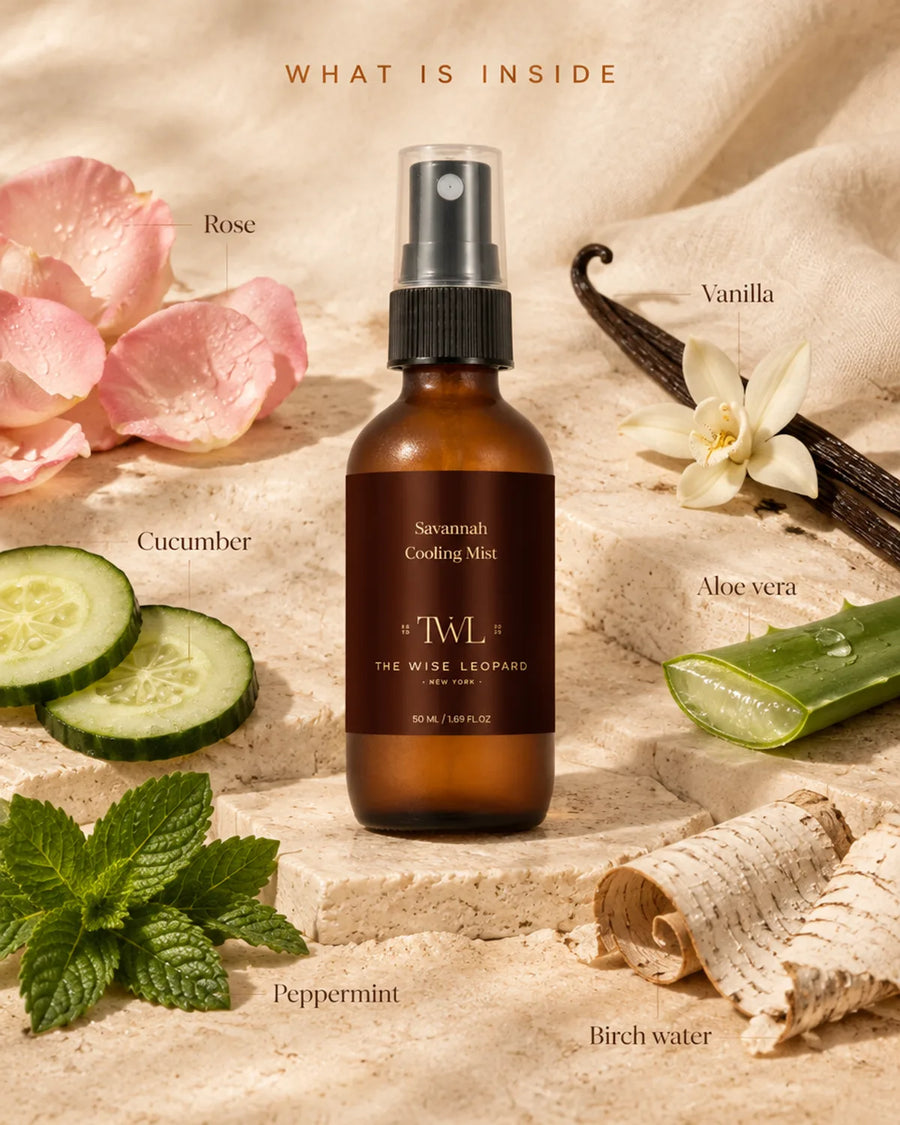
Even if you avoid every trigger, hot flashes will still happen, because diet doesn’t change the underlying hormonal cause. The Menopause Society notes that everyday comfort measures like these aren’t proven to reduce how often hot flashes happen, though they can make them easier to live with.[3] That’s why it’s worth pairing trigger awareness with a quick way to feel cooler when a flash does hit, like the Savannah Cooling Mist. It won’t stop hot flashes from happening, but a few spritzes on your neck, chest, and wrists give you soothing, in-the-moment comfort.
And if hot flashes are frequent or disrupting your sleep, work, or daily life, talk to your doctor, who can walk you through the full range of options that may be right for you.
Frequently asked questions
Does cutting out caffeine stop hot flashes?
Not completely. If caffeine is one of your personal triggers, cutting back may mean fewer flashes set off by it, but it won’t eliminate hot flashes, since the root cause is hormonal.[1]
Is alcohol worse than caffeine as a trigger?
Both are common triggers,[2] and which one affects you more is personal. A food log is the easiest way to find out which matters more for you.
How long should I track my food triggers?
Two to four weeks is usually enough to spot a pattern, since how often hot flashes happen naturally varies from day to day.
Sources
[1] Mayo Clinic. “Hot Flashes: Symptoms & Causes.” mayoclinic.org.
[2] Mayo Clinic. “Hot Flashes: Diagnosis & Treatment.” mayoclinic.org.
[3] The Menopause Society. “Hot Flashes” (patient education). menopause.org.
This content is for educational purposes only and is not medical advice. If you need medical advice, please consult your doctor or medical provider.