How Long Do Hot Flashes Last? Stage by Stage

How long do hot flashes last?
For most women, hot flashes last around seven years in total, and for some they continue for more than a decade. A large U.S. study that followed women through the menopause transition, published in JAMA Internal Medicine, found the median duration of hot flashes and night sweats was about 7.4 years.[1] The Menopause Society puts the average at seven to ten years,[2] and Mayo Clinic notes that some women have them for more than a decade.[3] How long they last depends a lot on when they start, not just on when menopause officially begins.
Here’s the timeline, stage by stage.
Early perimenopause: when do hot flashes start?
Hot flashes often begin years before your final period, while your cycles are still fairly regular. At this stage many women find they are occasional and mild, easy to dismiss as “just a warm room.”
Late perimenopause: do hot flashes get worse?
As periods become irregular and estrogen swings more dramatically, many women notice hot flashes becoming more frequent and more intense. This is often when women first look for ways to stay comfortable, and when night sweats can start disrupting sleep.
Around the final period: does timing matter?
Yes, and it’s one of the biggest factors in how long hot flashes last. In the JAMA Internal Medicine study, women whose hot flashes began while they were still having regular periods or in early perimenopause had them the longest, a median of more than 11.8 years in total. Women whose hot flashes didn’t start until after their final period had them for a median of about 3.4 years.[1]
After menopause: how long do hot flashes continue?
For most women, hot flashes gradually ease after the final period. The same study found they continued for a median of about 4.5 years after the final period overall.[1] Women whose hot flashes started earliest tended to have them longest after menopause too, a median of about 9.4 years.[1]
What predicts a longer duration?
According to the JAMA Internal Medicine study, women tended to have hot flashes for longer when they had:[1]
- Earlier onset. Starting before or in early perimenopause was the strongest predictor of a longer total course.
- Higher stress, anxiety, or depressive symptoms when their hot flashes first began.
- Race and ethnicity. Black women had hot flashes for the longest time, and Chinese and Japanese women for the shortest. This is an area of ongoing research.
Separately, Mayo Clinic notes that smoking and a higher body mass index (BMI) are linked with having hot flashes more often.[3]
What this means for you
If your hot flashes started early, it may help to plan for the long game rather than waiting them out. That means building a comfort routine you can keep up for years, not weeks: cooling tools, knowing your triggers, and a conversation with your doctor about the options that may be right for you. If they started later, closer to your final period, research suggests there’s a reasonable chance they won’t last as long.[1]
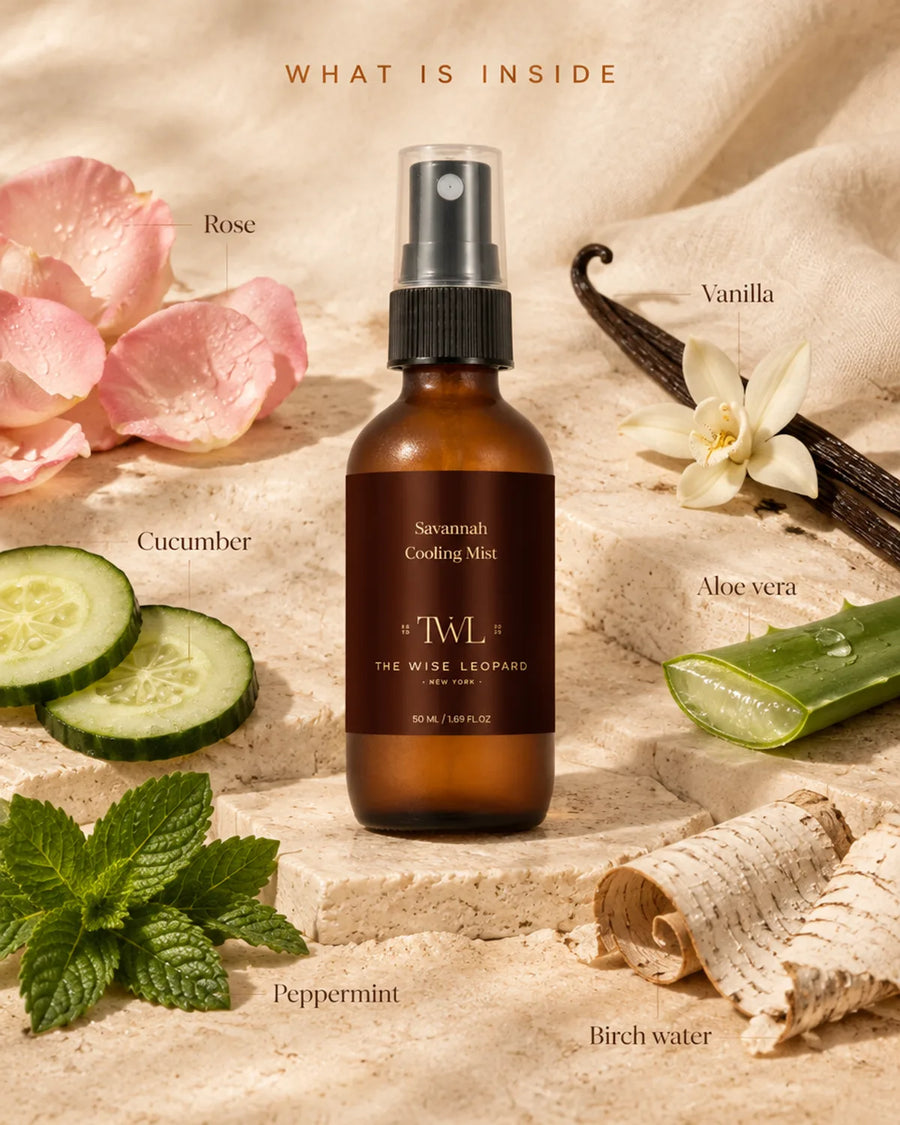
Either way, a quick, no-fuss cooling option like the Savannah Cooling Mist is something you can keep on hand at any stage. It won’t change how long hot flashes last, but it gives you soothing, in-the-moment comfort whenever one hits.
Frequently asked questions
Do hot flashes ever come back after they stop?
Hot flashes don’t always fade in a straight line, and some women notice they ease for a while and then flare again. If they return after a long break, or come with new symptoms like fever or unexplained weight loss, check in with your doctor, since other things can cause flushing and sweating too.[3]
Can anything shorten how long hot flashes last?
Everyday comfort habits can make hot flashes easier to live with, but The Menopause Society notes they aren’t proven to reduce how often hot flashes happen.[2] If hot flashes are disrupting your sleep, work, or daily life, your doctor can explain the full range of options, including medical ones, and what to expect over time.
Is it normal to have hot flashes for 10 years or more?
Yes. It’s well within the documented range, particularly for women whose hot flashes started early in perimenopause.[1] Mayo Clinic notes that some women have them for more than a decade.[3]
Sources
[1] Avis NE, Crawford SL, Greendale G, et al. “Duration of Menopausal Vasomotor Symptoms Over the Menopause Transition.” JAMA Internal Medicine, 2015. pubmed.ncbi.nlm.nih.gov.
[2] The Menopause Society. “Hot Flashes” (patient education). menopause.org.
[3] Mayo Clinic. “Hot Flashes: Symptoms & Causes.” mayoclinic.org.
This content is for educational purposes only and is not medical advice. If you need medical advice, please consult your doctor or medical provider.